
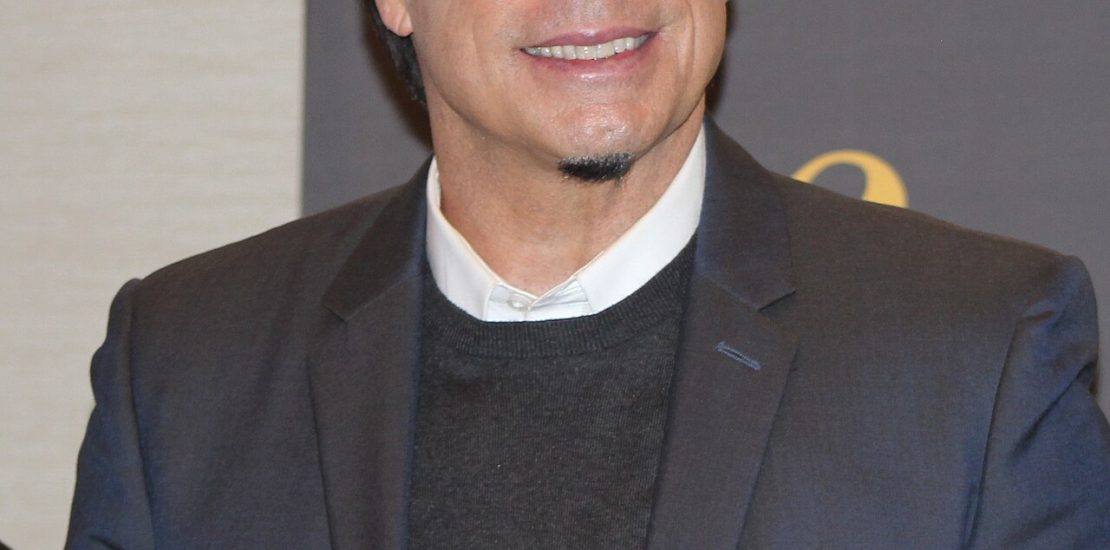
On May 15, 2026, Cannes Festival head Thierry Frémaux surprised John Travolta with an honorary Palme d’Or inside the Grand Théâtre Lumière. For many viewers, the most-discussed moment of the evening was not the award — it was the recipient’s face. White beret, round glasses, moustache and a dyed, disconnected beard: within hours, X had erupted into a debate over whether the man on the red carpet really was the actor of Grease, Saturday Night Fever and Pulp Fiction. Med Assistance investigates five decades of public photographs — and is careful to affirm only what the actor himself has affirmed.
The context: why his face became a talking point in May 2026
It started on Thursday, May 15, 2026, opening of the 79th Cannes Film Festival. John Travolta walked the red carpet with his daughter Ella Bleu Travolta, 26, to present Propeller One-Way Night Coach, his directorial debut, adapted from the children’s book he published in 1997. Before the screening, festival general delegate Thierry Frémaux presented him with a surprise honorary Palme d’Or. The actor broke down on stage: “This is beyond the Oscar,” he told the audience, microphone in hand, as Variety reported.
Yet in the hours that followed, the ceremony footage was not the most-shared content. The red carpet was. On X, viewers asked whether the man in the white beret and round glasses really was Vincent Vega. Bored Panda compiled an avalanche of memes — one user compared him to “a white Samuel L. Jackson,” another to Jack Harlow. Hola reported that the actor had been “roasted” by online comments. Yahoo ran the headline “unrecognizable.” WION even floated the possibility of an Ozempic-related transformation, without offering any source.
Beyond the stylistic gimmick — the beard and beret are, in part, a tribute to the aviator-adventurer Travolta plays in Propeller — the moment gave specialist publications and cosmetic-surgery forums an opportunity to revisit a question that has followed the actor for thirty years: what has actually happened, over time, to that face and that scalp? That is what the Med Assistance editorial team has tried to document, relying exclusively on public sources and comparative photography. Without affirming what the actor himself has never affirmed.
Who is John Travolta? A brief biography
Born February 18, 1954 in Englewood, New Jersey, John Joseph Travolta is 71 in May 2026. He first rose to fame at 21 in the ABC sitcom Welcome Back, Kotter (1975–1979), before two Robert Stigwood / Randal Kleiser films propelled him into the stratosphere: Saturday Night Fever (1977) and Grease (1978). His career then went through a fallow decade — until Quentin Tarantino’s Pulp Fiction (1994), which earned him an Academy Award nomination and a Hollywood resurrection that carried through Get Shorty, Face/Off and Hairspray.
His private life has been marked by two profound losses: the death of his son Jett in 2009, aged 16, and of his wife Kelly Preston in 2020 from breast cancer. Travolta is known for his longstanding involvement in Scientology and his passion for aviation: he pilots his own airliners, including a Boeing 707-138 that once belonged to Qantas. To this day, he has never publicly confirmed any cosmetic procedure or hair transplant — a fact systematically noted across specialized analyses in the field.
Exhibit n°1: five decades of public photographs (1976 → 2018)
The method is straightforward: line up public photographs spaced across time, observe, note what changes. No assertion — just observation.
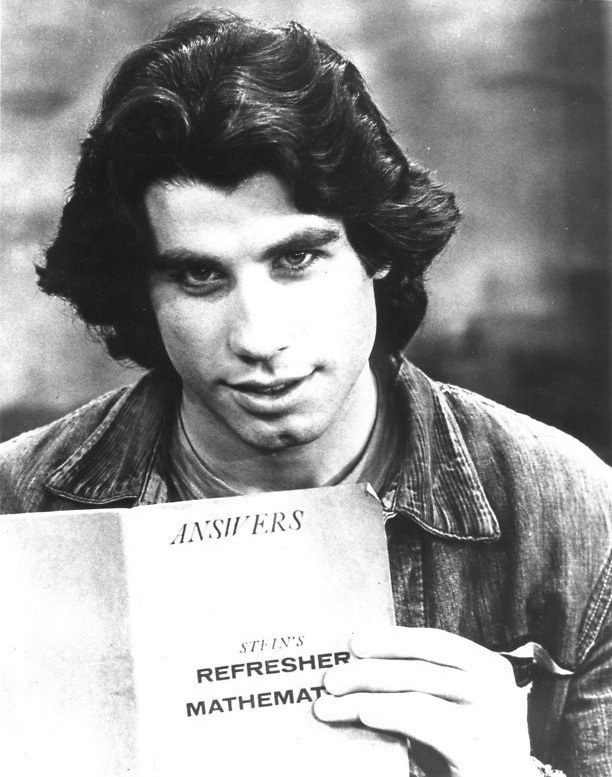
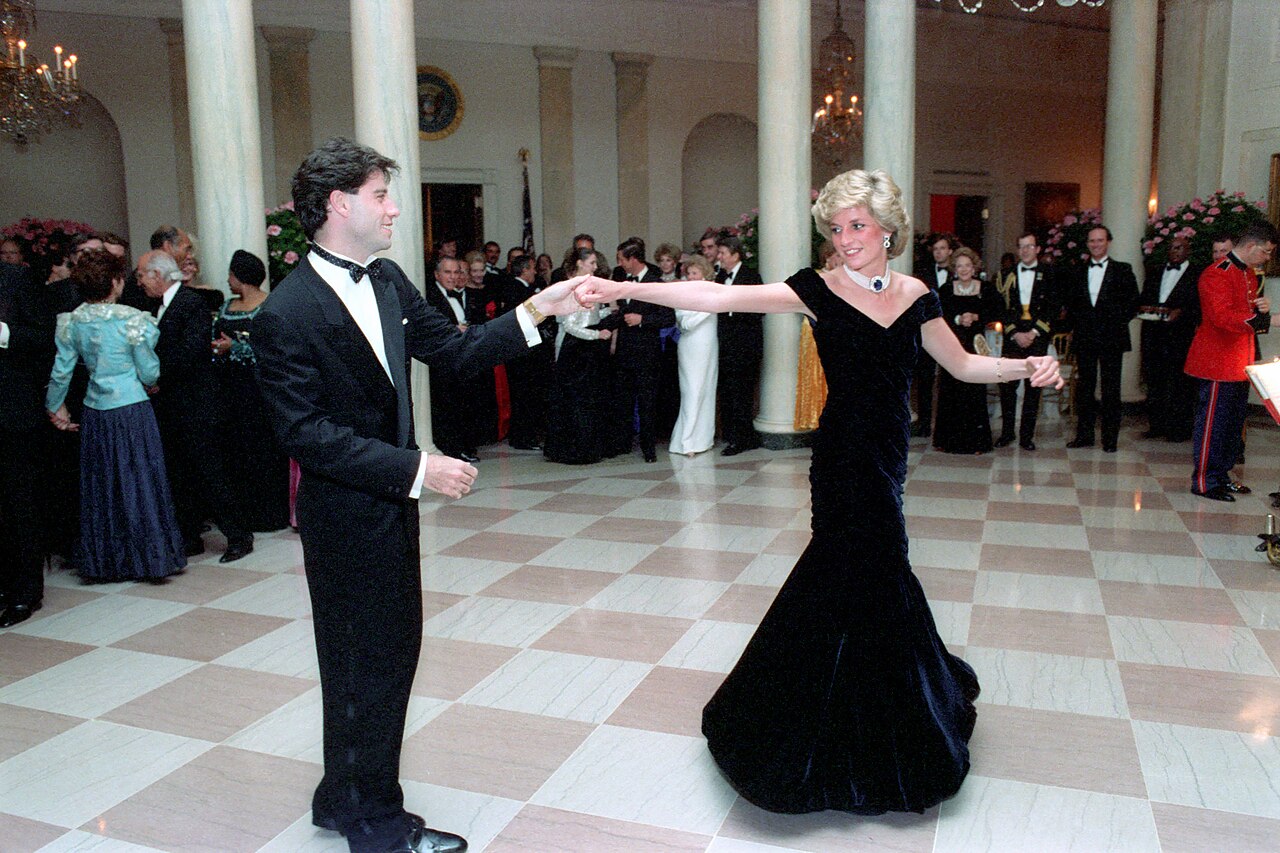
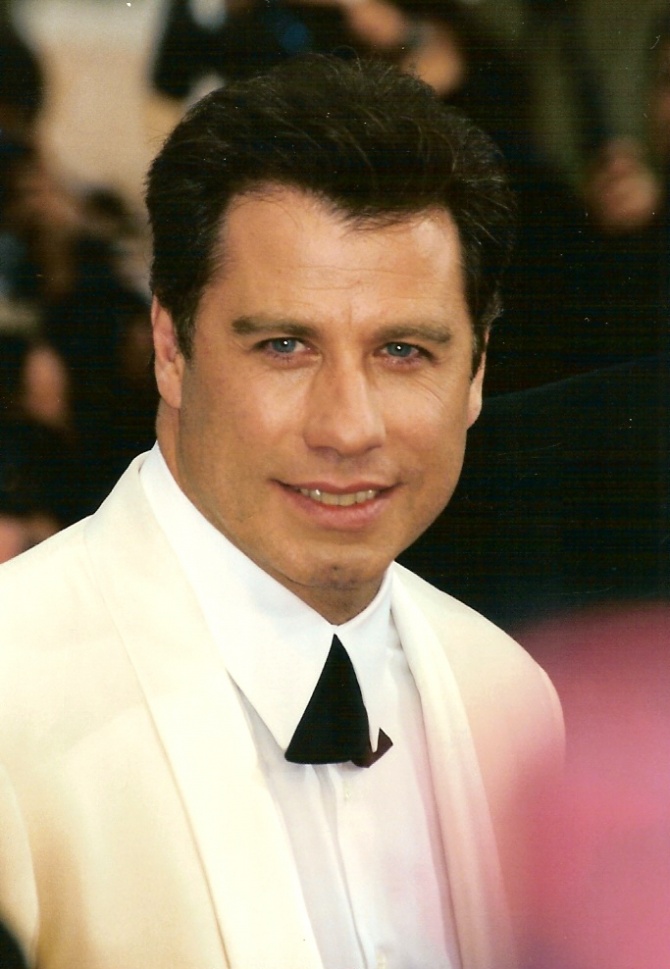
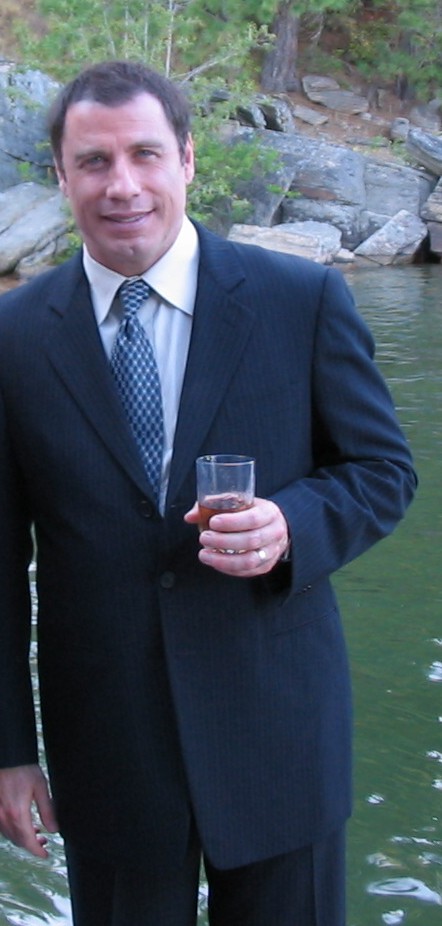
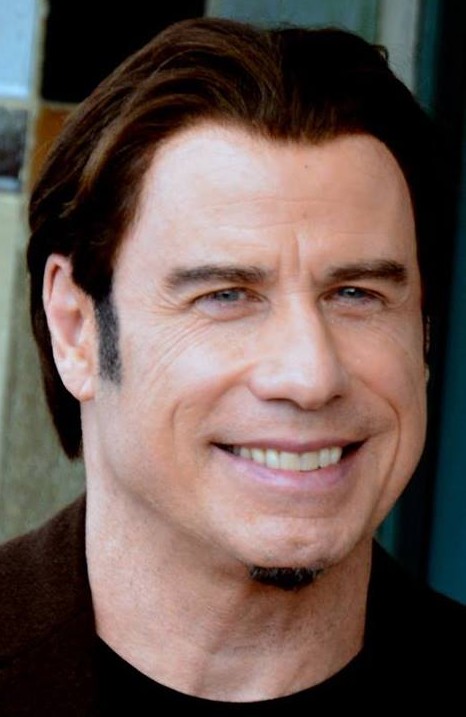
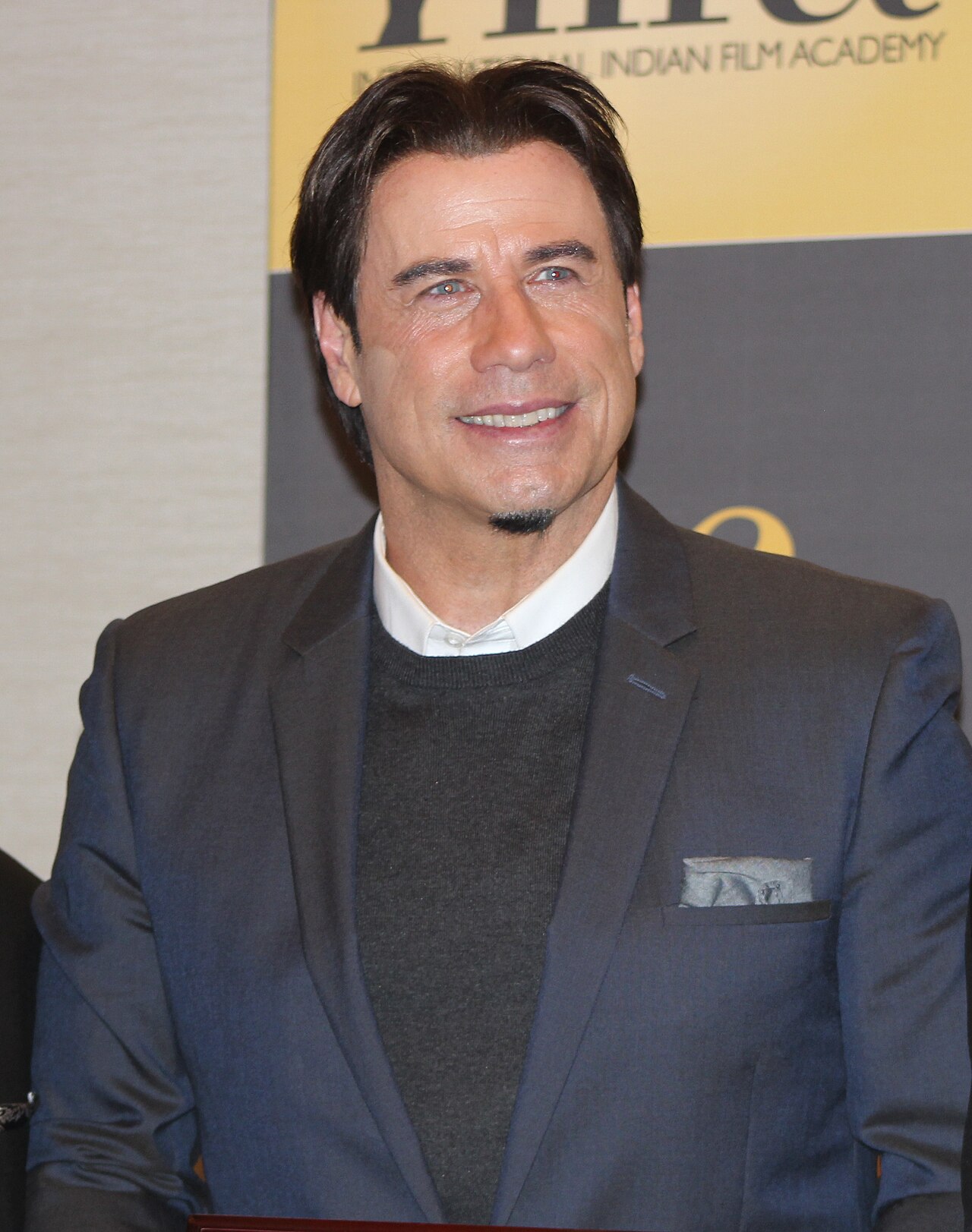
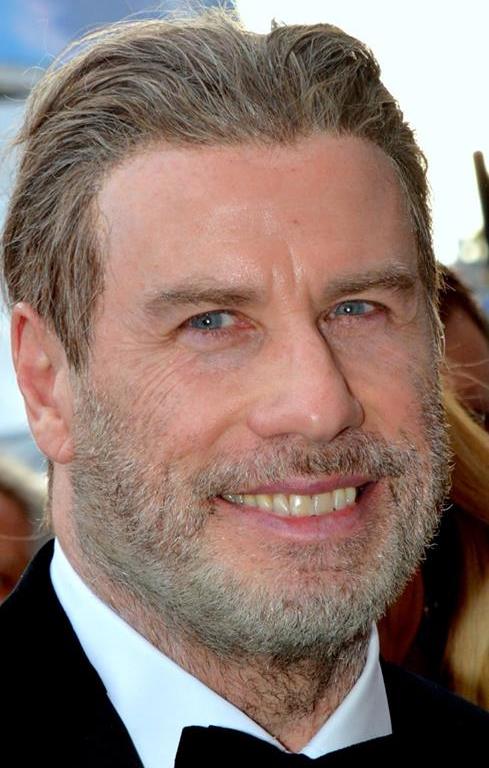
To this series of seven images one must now add the May 15, 2026 photographs that drove the online debate. As those images are the work of agencies present in Cannes (Reuters, AFP, Getty), we do not reproduce them here, but they are accessible through the Variety gallery and Deadline. At 71, Travolta wears a dyed, disconnected beard — which alone changes the perceived architecture of the face — and a beret that hides the scalp entirely, making any red-carpet diagnosis largely speculative.
See yourself in any of these concerns? Whether you are considering a FUE hair transplant, a deep plane cervico-facial lift to redefine the jawline and neck, or preventive neurotoxin (Botox) injections to preserve the forehead area, the Med Assistance team will send you a free personalized quote within 24 hours, with no obligation, performed by qualified surgeons operating in Tunisia. → Get my quote
Exhibit n°2: what specialist clinics and entertainment press say
Most international hair-restoration clinics have, at one point or another, included John Travolta in their portfolio of “famous case studies.” The tone is invariably the same: observe, propose hypotheses, remind the reader that no public confirmation exists.
On the hair side, analyses published by Pinkvilla place “a first probable intervention around the mid-1990s,” followed by “several complementary FUE sessions in the 2000s and 2010s.” Other analyses identify 2016 as the supposed year of a major new hair restoration, based exclusively on comparative photography. All of which, it should be emphasized, sits firmly in the realm of external visual analysis.
On the face, Celebshistory and FandomWire raise the hypothesis of a cervico-facial (deep plane) lift, neurotoxin (Botox) injections in the upper third, and small filler sessions. No source draws on any medical file: it is always inference from images. As for the Cannes 2026 rumors of a possible GLP-1-related weight loss (the Ozempic/semaglutide thread), WION is one of the few outlets to have raised the question, again without any identified source.
Exhibit n°3: the actor’s public position
In fifty years of public life, John Travolta has, to our knowledge, never given an interview in which he acknowledged a specific cosmetic procedure. This can be summed up as follows: “There is no public confirmation that John Travolta underwent a hair transplant or any surgical hair restoration procedure — no interview, no statement, no verified medical disclosure.”
On the question of facelifts and Botox, multiple specialist articles note that “despite persistent rumors, Travolta has never publicly addressed the possibility of a facelift or neurotoxin injections.” His strategy resembles that of several of his contemporaries (Tom Cruise, Brad Pitt): say nothing, deny nothing, let the photographs speak. On the Cannes red carpet of May 15, 2026, he again made no reference to his appearance — his speech was entirely devoted to his daughter, his late son Jett, and his directorial debut.
Exhibit n°4: the Hollywood context of “70+ actors who still want to work”
This investigation would be incomplete without the contextual exhibit. At 71, John Travolta is executing a double pivot: he is stepping behind the camera (Propeller One-Way Night Coach is his directorial debut), and he came to Cannes to collect a piece of institutional recognition (an honorary Palme d’Or) that his post-2010 filmography — uneven by any measure — had not always secured for him. In the film industry, this “comeback” moment statistically coincides with a more assertive use of cosmetic interventions.
ISAPS, the International Society of Aesthetic Plastic Surgery, notes in its 2024 global report a 28% rise over ten years in cosmetic procedures among men aged 65 and over, with the majority concentrated on the scalp and the upper third of the face. The global male hair-transplant market is estimated at close to $2.7 billion in 2024 (Grand View Research). Hollywood, where HD cameras forgive nothing, represents a particular showcase of this market. None of this proves anything about John Travolta — it merely situates the conversation in an industry where Robert De Niro and Al Pacino (who insist they have never touched their face) are now the exception, not the rule.
The verdict of the Med Assistance investigation
At the conclusion of this investigation, drawing exclusively on public sources and comparative photography, Med Assistance answers with the prudence the topic requires:
- ✓ Compelling visual indicators: scalp coverage that does not match the statistical aging curve of Caucasian men over 50; frontal and peri-orbital skin visibly tighter at 60 than at 50, the reverse of the natural trajectory; jawline and neck better defined from the 2010s onward.
- ✗ No public medical proof: no surgical file, no statement from the actor, no testimony from any practitioner.
- = We cannot say for certain: with the naked eye, we cannot separate what is surgical from what is injectable (Botox / fillers), from dermatologic care (lasers, peels), from the work of a stylist or makeup artist, or simply from a particularly disciplined lifestyle. As for the Cannes 2026 look itself, the dyed disconnected beard and the white beret are more than enough to explain the “unrecognizable” impression reported by Yahoo and ARTVOICE — without needing to invoke any recent surgical intervention.
Frequently asked questions
Has John Travolta ever confirmed undergoing plastic surgery or a hair transplant?
No. At no point in his career has the actor publicly acknowledged a hair transplant, a cervico-facial lift or neurotoxin injections. Every such analysis published by specialist clinics in the field is a hypothesis based on comparative photography.
Why did his face look so different at Cannes 2026?
Three factors add up. First, strong styling choices: a dyed, disconnected beard and a white beret hiding the scalp area. Second, possibly some weight loss (the press floated the Ozempic hypothesis without any source). Third, the effect of red-carpet lighting and low-angle photography. No recent procedure has been confirmed by the actor.
Why would patients from the UK, US or Canada choose Tunisia for plastic surgery?
Tunisia has built one of the largest cosmetic medical-tourism sectors in the Mediterranean, with internationally trained surgeons, modern accredited facilities and prices typically significantly lower than equivalent procedures in the UK, US or Canada. Med Assistance organizes package stays (procedure, hospitalization, hotel, transfers and follow-up) and provides a free personalized quote within 24 hours.
How much does a FUE hair transplant cost in Tunisia versus the US or UK?
An FUE hair transplant in Tunisia starts at €1,500 (1 session) (~$2,050 / £1,650), versus $10,000–$15,000 in the US and £4,000–£8,000 in the UK for comparable graft counts. The technique, equipment and protocols are aligned with international standards; the price differential reflects differences in cost of living, not in clinical quality. Med Assistance partners with surgeons accredited to international hair-restoration societies.
How much does a deep plane facelift cost in Tunisia?
A complete cervico-facial (deep plane) lift in Tunisia starts at approximately €2,400 (~$3,450 / £2,750) for a package stay (surgery, hospitalization, hotel, airport transfers, follow-up). Equivalent surgery with a top US surgeon often exceeds $25,000. Med Assistance provides a tailored quote within 24 hours after reviewing your photographs.
In summary
At 71, John Travolta has just added an honorary Palme d’Or to a career already in the history books. His May 15, 2026 Cannes red-carpet appearance divided social media and reopened a thirty-year conversation about the evolution of his face. Several international clinics have long evoked the possibility of hair transplants, a facelift and neurotoxin injections: none of those hypotheses has been confirmed publicly by the actor, and this investigation does not attempt to supply that confirmation.
The only thing Med Assistance can speak to with certainty is the techniques themselves — FUE hair restoration, deep plane cervico-facial lift, preventive neurotoxin and dermal-filler injections — which are available in Tunisia at prices substantially lower than in the UK, US or Canada, under safety and follow-up conditions equivalent to those of any major Western medical-tourism destination. If you would like to discuss your own situation, your personalized quote is free and carries no obligation.
Editorial disclaimer. Mr. John Travolta has not publicly confirmed any plastic-surgery or hair-restoration procedure. Med Assistance attributes no intervention to him and fully respects his right to privacy. All hypotheses formulated in this article are reported as such, in accordance with image rights and the presumption of non-procedure. The photographs illustrating this article come from Wikimedia Commons, under a Creative Commons license or in the public domain, and are accompanied by their author credit as required by their license terms.
What Cosmetic Procedures Is John Travolta Rumored to Have Had? A Surgeon’s Perspective
While John Travolta has never confirmed any cosmetic surgery, qualified plastic surgeons and celebrity analysts have long speculated about several procedures based on comparative photo analysis. The most commonly cited procedures include: hair transplant (FUE or FUT) to restore his receding hairline, visible in early 2000s photos; facelift (likely deep plane or SMAS lift) to tighten jowls and define the jawline; eyelid surgery (blepharoplasty) to reduce hooding and puffiness; and botox or fillers for forehead lines and cheek volume. A 2026 analysis by Dr. Mark Hamilton, a UK-based cosmetic surgeon, noted that Travolta’s skin appears unusually smooth for a 71-year-old, suggesting possible laser resurfacing or chemical peels. These observations are not confirmations, but they help patients understand what a comprehensive facial rejuvenation plan might include.
How Much Does a Full Facial Rejuvenation Cost in Tunisia vs. the UK/US?
For patients inspired by celebrity transformations, Tunisia offers world-class cosmetic surgery at a fraction of Western prices. A complete facial makeover—combining a deep plane facelift, upper and lower blepharoplasty, and a FUE hair transplant (2,500 grafts)—is priced on request after a free quote in Tunisia, including all hospital, surgeon, and anesthesia fees. In the UK, the same combination would exceed £30,000; in the US, it can surpass $45,000. Med Assistance offers packages that cover surgery, hotel accommodation, airport transfers and follow-up, excluding flights, pre-operative tests and discharge medication. Patients save significantly while receiving care from surgeons trained in Europe and the US, using modern accredited clinics.
What Is the Recovery Timeline for a Facelift and Hair Transplant?
Understanding recovery is crucial for medical tourists. For a deep plane facelift, initial swelling and bruising subside within 10–14 days; most patients return to work after 2–3 weeks. Strenuous activity is restricted for 6 weeks. For a FUE hair transplant, the donor area heals in 5–7 days, and transplanted hairs shed within 2–3 weeks before regrowing permanently over 6–12 months. In Tunisia, Med Assistance arranges a 7–10 day stay for surgery and initial recovery, with a dedicated nurse and 24/7 support. Patients can combine procedures to minimize total downtime.
Why Choose Tunisia for Cosmetic Surgery? Safety and Accreditation
Tunisia’s medical tourism sector is regulated by the Ministry of Health, and leading clinics hold international accreditations such as ISO 9001. Surgeons are members of societies like ISAPS (International Society of Aesthetic Plastic Surgery). Med Assistance vets all partner clinics and provides transparent pricing, patient reviews, and free consultations. For UK, US, and Canadian patients, Tunisia is a short flight (2–3 hours from Europe) with no jet lag, making it ideal for elective surgery.
See also
FAQ
What are the most common plastic surgery procedures for men over 50?
For men aged 50+, the most requested procedures are facelift (deep plane or SMAS), eyelid surgery (blepharoplasty), hair transplant (FUE), and neck lift. These address sagging jowls, hooded eyes, hair loss, and loose neck skin. In Tunisia, a combined facelift and blepharoplasty package is available upon a free quote, compared to $20,000+ in the US.
How long do results from a facelift last?
A well-performed deep plane facelift typically lasts 10–15 years, depending on skin quality, lifestyle, and aging. Maintenance treatments like fillers or laser can extend the results. In Tunisia, Med Assistance offers free follow-up consultations to monitor long-term outcomes.
Is it safe to combine a facelift and hair transplant in one trip?
Yes, combining procedures is common and safe when performed by an experienced surgeon. The total surgery time increases, but recovery is often streamlined. In Tunisia, Med Assistance coordinates combined surgeries with a single anesthesia session, reducing overall cost and downtime. A combined facelift + FUE package saves on cost compared to separate procedures.
What is the difference between a deep plane facelift and a SMAS lift?
A deep plane facelift releases deeper facial layers (SMAS and retaining ligaments) for a more dramatic, longer-lasting result, ideal for patients with significant sagging. A SMAS lift tightens the superficial muscular aponeurotic system. Both are offered in Tunisia; the deep plane is preferred for men like John Travolta who need comprehensive rejuvenation. Prices start at €2,400 for deep plane vs. €2,400 for SMAS.
How much does a hair transplant cost in Tunisia for 2,500 grafts?
A FUE hair transplant for 2,500 grafts in Tunisia costs from €1,500 per session (surgery, hotel, transfers). In the UK, the same procedure costs £5,000–£8,000; in the US, $8,000–$15,000. Tunisian clinics use the same ARTAS or manual FUE systems as Western clinics.
Can I see before-and-after photos of male facelift patients in Tunisia?
Yes, Med Assistance provides a private gallery of verified before-and-after photos from real patients during your free consultation. We respect patient confidentiality and only share images with explicit consent. Contact us for a personalized link.
What is the success rate of hair transplants in Tunisia?
Success rates for FUE hair transplants in accredited Tunisian clinics exceed 95%, comparable to top UK and US clinics. Graft survival depends on surgeon skill and patient aftercare. Med Assistance’s partner clinics report a 98% patient satisfaction rate for hair restoration.